Peace Lives Here: How to Protect Your Mind in an Anxious World
Why anxiety feels so loud right now—and the biblical path to inner calm.

Introduction: Why Anxiety Feels So Loud Right Now
We are living in one of the most connected eras in human history—and paradoxically, one of the most anxious.
Anxiety disorders are rising. Sleepless nights are common. Minds race constantly. People are overwhelmed by news cycles, financial pressure, social comparison, uncertainty about the future, and an unrelenting digital noise that never truly shuts off. Even believers—those grounded in faith—often feel mentally exhausted, spiritually distracted, and emotionally stretched thin.
If you’ve ever asked yourself:
- Why can’t I find peace even though I believe in God?
- Why does my mind keep racing even when I pray?
- How do I protect my mental health in a world that feels chaotic?
You are not weak. You are human.
The Bible never denies the reality of anxiety—but it does offer a way to guard your mind, anchor your thoughts, and experience peace that does not depend on circumstances.
This article is a practical, Scripture-based guide to protecting your mind in an anxious world—rooted in biblical truth, psychological wisdom, and lived Christian experience.
Peace is not a personality trait.
Peace is not denial.
Peace is not pretending everything is fine.
Peace is a disciplined, spiritual posture—and it can be learned.
Understanding Anxiety from a Biblical Perspective
Anxiety Is Not New
Sometimes anxiety is treated as a modern invention—but Scripture tells a different story.
- • David cried out in distress (Psalm 55).
- • Elijah collapsed under fear and exhaustion (1 Kings 19).
- • Martha was “anxious and troubled about many things” (Luke 10:41).
- • Even Jesus acknowledged mental anguish in Gethsemane (Matthew 26:38).
The Bible does not shame anxiety. It addresses it directly.
“When anxiety was great within me, your consolation brought me joy.”
— PSALM 94:19
Anxiety becomes destructive when it rules the mind, distorts perception, and pulls the heart away from trust in God.
What Anxiety Really Is
At its core, anxiety is the mind trying to control the future without the power to do so. Biblically speaking, anxiety often arises when:
- We focus on what we cannot control
- We carry burdens God never asked us to hold
- We rehearse fear instead of rehearsing truth
- We consume more information than our spirit can process
Jesus addressed this directly:
“Do not be anxious about your life… Who of you by worrying can add a single hour to your life?” — Matthew 6:25–27
Anxiety promises protection—but delivers exhaustion.
Why the Mind Must Be Guarded
The Mind Is a Battlefield
Scripture consistently emphasizes the importance of the mind because thoughts shape direction.
“As a man thinks in his heart, so is he.” — Proverbs 23:7
We are told to take “every thought captive to obey Christ” (2 Corinthians 10:5) because your mind is not neutral ground. It is constantly being influenced—by fear, culture, media, trauma, and truth. If peace is going to live anywhere, it must live in the mind first.
Related Reading: For a deeper dive on the spiritual battle for your mind, read our guide on What Is Spiritual Warfare? (It’s Not What You Think).
What You Allow In, Grows
What you repeatedly consume becomes what you eventually believe.
- Fear-based news → chronic anxiety
- Comparison → insecurity
- Endless scrolling → mental fatigue
- God’s Word → clarity and peace
This is not just spiritual language—it aligns with modern neuroscience. Repeated thought patterns literally rewire the brain. Scripture acknowledged this long before science caught up: “Be transformed by the renewing of your mind.” (Romans 12:2).
The Biblical Definition of Peace (It’s Deeper Than Calm)
When Scripture speaks of peace, it often uses the word shalom. Shalom means wholeness, completeness, inner stability, and right alignment with God.
Biblical peace is not the absence of trouble—it is the presence of God within trouble.
The world’s peace depends on stability, control, and predictability. God’s peace operates independently of circumstances. That is why Paul could write from prison: “the peace of God, which surpasses all understanding, will guard your hearts and your minds in Christ Jesus.” (Philippians 4:7).
Notice the language: Peace guards the mind.
THE WAR ROOM CHECKLIST
Stop fighting air. Start hitting targets. Get the daily spiritual protocol for Kingdom Entrepreneurs.
GET YOUR FREE BATTLE PLANInstant PDF Download
Practical, Scripture-Based Ways to Protect Your Mind
1. Replace Rumination with Prayer (Philippians 4 Framework)
Anxiety thrives on repetition—so does peace. Paul gives a clear process in Philippians 4: Identify the worry, bring it to God, give thanks, and receive peace.
Prayer is not avoidance—it is mental redirection. Instead of replaying worst-case scenarios, you rehearse trust. “Cast all your anxiety on Him because He cares for you.” (1 Peter 5:7). Casting implies intentional release, not passive hoping.
2. Limit What Enters Your Mind Daily
Not everything that is available is beneficial. Proverbs 4:23 says to guard your heart above all else. This includes news, social media, entertainment, and conversations.
Ask yourself: Does this increase fear or faith? Does this bring clarity or confusion? Mental health is not just about coping—it’s about curation.
3. Anchor Your Thoughts in Truth, Not Feelings
Feelings are real—but they are not reliable leaders. Isaiah 26:3 promises perfect peace to those whose minds are "steadfast" because they trust in God.
A steadfast mind is a trained mind. Identify anxious thoughts, counter them with specific Scripture, and repeat until truth feels louder than fear.
Need practical tools? Download our Spiritual Protection Guide to get specific prayers and scriptures that help you stand firm when anxiety tries to take over.
4. Rest Is Spiritual Warfare
One of the enemy’s most effective strategies is exhaustion. When Elijah was suicidal with fear, God didn't lecture him; He fed him and let him sleep.
Rest is obedience. Jesus invites the heavy-laden to come to Him for rest (Matthew 11:28). A rested mind hears God more clearly.
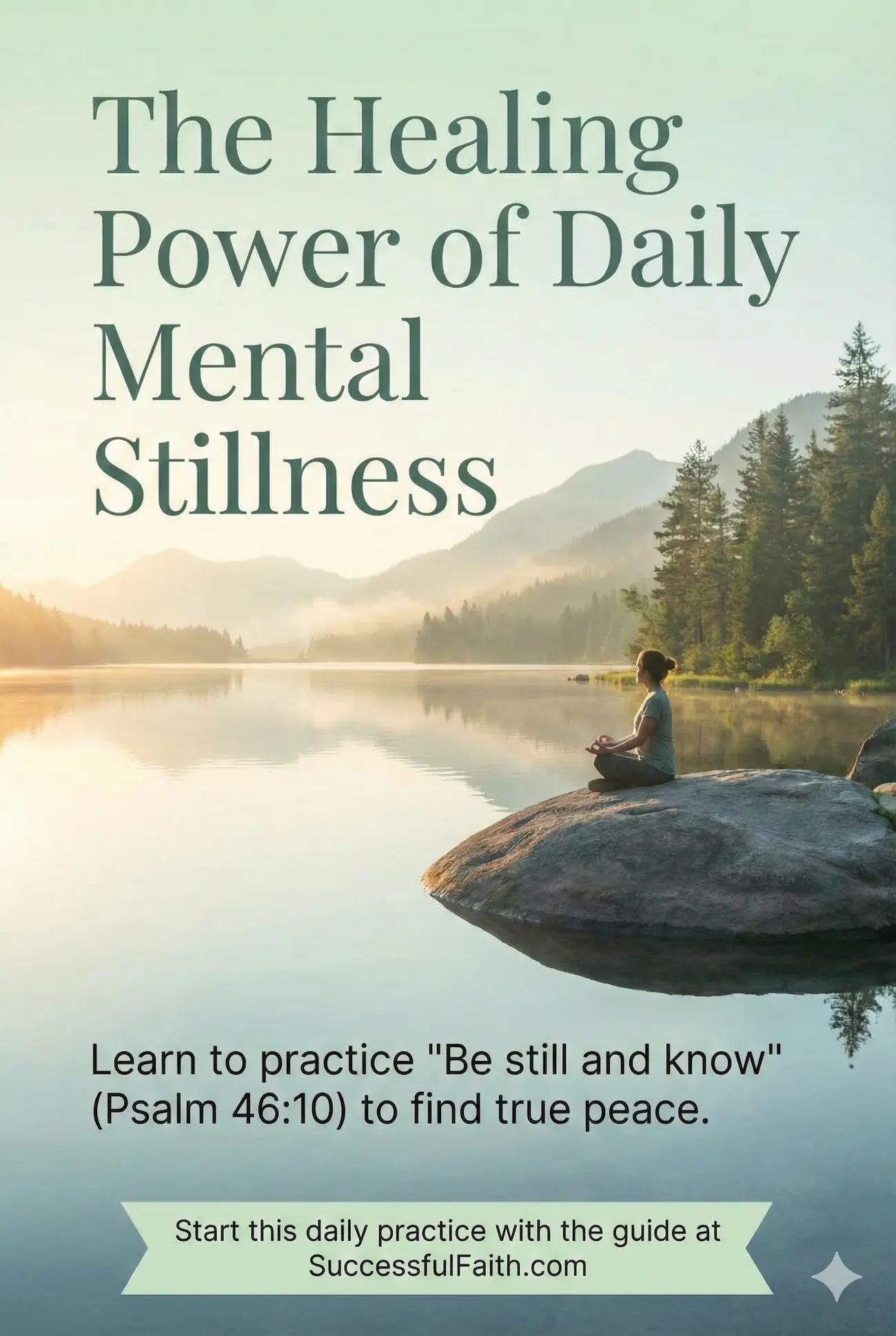
5. Practice Daily Mental Stillness Before God
Silence feels uncomfortable to an anxious mind—but it is healing. “Be still, and know that I am God.” (Psalm 46:10).
Stillness trains the nervous system to stand down. Even 10 minutes a day of quiet prayer or slow, God-centered breathing can dramatically reduce anxiety over time.
When Anxiety Is Clinical: Faith and Wisdom Work Together
It’s important to say this clearly: Seeking professional help does not mean weak faith.
Luke was a physician. Proverbs praises wise counsel. God often heals through means. If anxiety becomes debilitating—persistent panic attacks, inability to function, intrusive thoughts—seek medical and therapeutic support alongside prayer. Faith is trusting God through the process of healing.
How Jesus Modeled Mental Peace Under Pressure
Jesus faced constant opposition, betrayal, and the weight of the cross. Yet He regularly withdrew to pray, slept during storms, and responded thoughtfully under accusation.
Peace was not accidental—it was cultivated.
A Daily Biblical Routine for Mental Peace
Here’s a simple structure you can adopt. Small daily disciplines compound into deep peace.
- Scripture reading (5–10m)
- Prayer of surrender
- Set intention for the day
- Pause and breathe
- Re-center thoughts with a verse
- Reflect & release worries
- Gratitude prayer
- Limit screens before sleep
Final Encouragement: Peace Is a Place You Can Live In
Peace is not something you visit occasionally—it is something you abide in. “You will keep in perfect peace those whose minds are steadfast.” (Isaiah 26:3).
Your mind does not have to be a constant battleground. Your thoughts do not have to spiral endlessly. Your faith does not have to feel fragile.
Peace lives here—when your mind is anchored in God. And no anxious world can take that away.
About the Author: Sanderson is the founder of Successful Faith, equipping believers with the spiritual and practical tools to win in life and business.
Posted in Mental & Spiritual Health • Tagged #Anxiety, #Peace, #Mindset